

What Is a Recruiter? Roles, Types, and Career Impact
Learn what is a recruiter is, their role in jobs and careers, and how independent recruiters, headhunters, and recruitment consultants help candidates and employers succeed.
A recruiter is someone who connects job seekers with employers, acting as a bridge between talent and opportunity. These professionals don’t just post job ads—they manage the entire hiring process, from identifying potential candidates to helping companies make strategic hiring decisions. Many people confuse recruiters with headhunters or recruitment consultants, but while their approaches may differ, all share the same ultimate goal: ensuring that the right people end up in the right roles.
what is a recruiter helps both candidates and companies make smarter hiring and career decisions.
Recruiters can work in-house for a company, operate independently, or be part of specialized recruitment agencies. Their daily responsibilities can include posting job openings on various platforms, screening resumes to identify the most qualified candidates, conducting interviews, coordinating with hiring managers, and even assisting in negotiating job offers.
A skilled recruiter doesn’t just fill vacancies; they focus on matching candidates’ skills, experiences, and career goals with the long-term needs of the company, improving both employee satisfaction and retention.
By understanding what a recruiter is, both job seekers and employers can navigate the hiring process more effectively. Candidates can leverage recruiters to uncover hidden opportunities and receive valuable career advice, while employers can save time, reduce hiring risks, and secure better-fit hires. In today’s competitive job market, recruiters play a critical role in making the hiring and career-building process efficient and strategic.
Recruiter Types
Recruiters are not all the same. Their approaches and specializations vary depending on the type of recruitment work they do.
In-House Recruiters work directly for a company and focus solely on filling internal roles. Because they are embedded within the organization, they have an intimate understanding of the company’s culture, values, and long-term business goals.
This allows them to not only assess a candidate’s skills but also evaluate whether the person will thrive within the company environment. In-house recruiters often maintain ongoing relationships with hiring managers and are responsible for workforce planning, ensuring that staffing aligns with business needs.
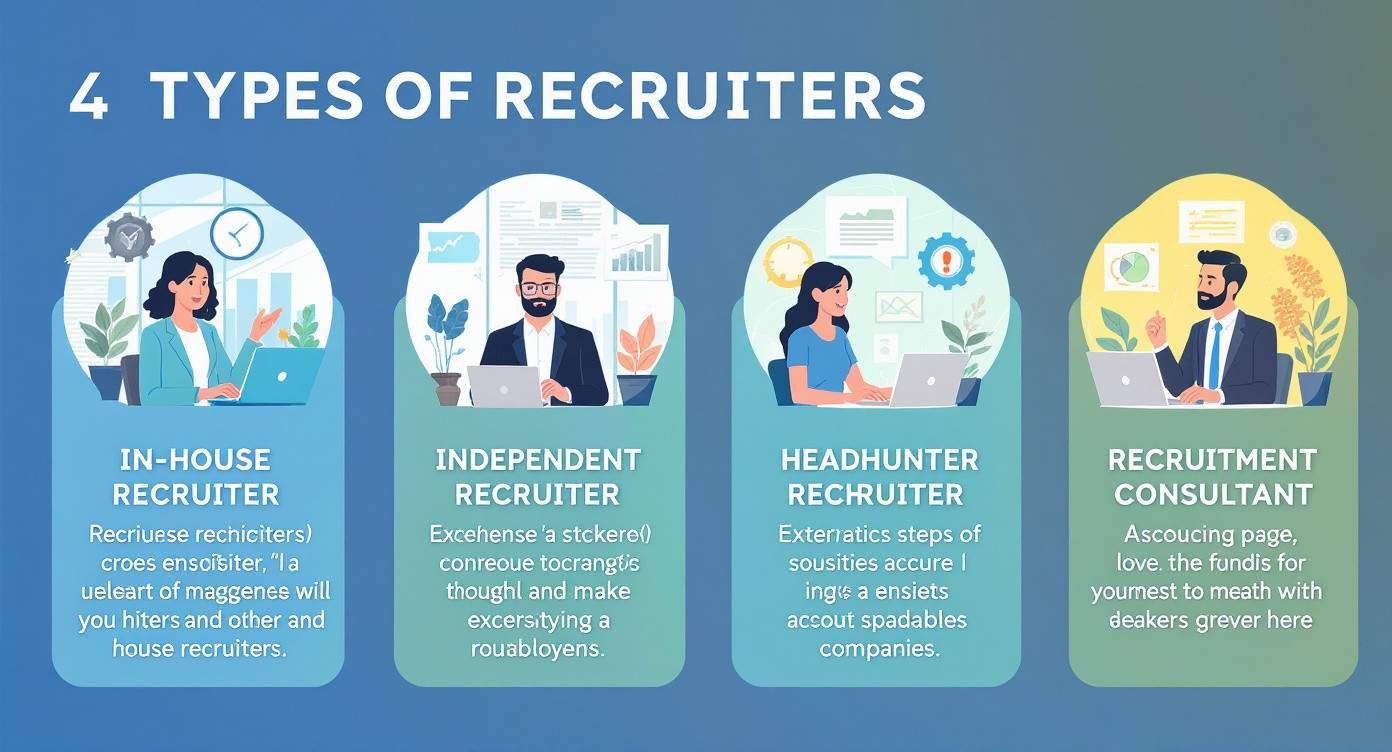
Independent Recruiters operate outside of traditional agencies and are often hired for their specialized expertise. These recruiters usually focus on particular industries or job functions, making them valuable resources for both candidates and companies seeking niche talent. Independent recruiters may work on a fee-per-placement model or on retainer, depending on the agreement. For job seekers, they can provide more personalized guidance and often have access to exclusive job openings that aren’t publicly listed.
Headhunters specialize in sourcing highly skilled or executive-level talent. Unlike traditional recruiters who wait for candidates to apply, headhunters actively reach out to professionals who may not even be looking for a new job.
They often use their networks and research skills to identify top talent and persuade them to explore new opportunities. This type of recruitment is critical for roles that require rare expertise, leadership experience, or strategic vision.
Recruitment Consultants provide advisory services to both companies and candidates. They not only help fill roles but also offer strategic guidance on hiring practices, career development, and market trends.
Consultants maintain long-term relationships with their clients, often tracking industry developments and candidate progress over time. This proactive approach ensures that both employers and job seekers benefit from informed decisions rather than reactive hiring.
Role in Careers
Recruiters are far more than middlemen—they can shape careers. For job seekers, they provide access to job opportunities that may never be advertised publicly. This “hidden job market” includes positions that companies prefer to fill quietly or with specific talent in mind.
Recruiters also provide actionable advice on crafting resumes, improving LinkedIn profiles, preparing for interviews, and negotiating compensation packages. Their insights can accelerate career growth, helping candidates avoid common pitfalls and position themselves for the roles they truly desire.
For employers, recruiters act as strategic partners. They reduce the time and cost associated with hiring by identifying qualified candidates quickly and efficiently. Experienced recruiters bring market intelligence, such as industry salary benchmarks, talent availability, and competitive hiring trends, which companies may not have in-house.
By ensuring that candidates fit both the role requirements and the company culture, recruiters help reduce turnover, improve productivity, and foster long-term employee satisfaction.
In both cases, the recruiter’s role is to facilitate the right connections at the right time, creating mutually beneficial outcomes for candidates and employers alike. In fast-moving industries, having a skilled recruiter involved can make the difference between a successful hire and a costly mistake.
Common Misconceptions
Despite their importance, many people misunderstand recruiters. A common misconception is that recruiters only work for companies. While many do, independent recruiters and some consultants also assist job seekers directly, providing guidance and access to opportunities.
Another myth is that recruiters can guarantee a quick job. In reality, the hiring process is often lengthy, especially for specialized roles or leadership positions. Recruiters must assess candidate skills, match them to role requirements, coordinate interviews, and often negotiate offers—all of which take time.
Cost is another area of confusion. While companies pay recruiters for their services, most candidates do not. Independent recruiters may operate differently, but the goal is always to provide value rather than profit from candidates. Understanding these realities helps both job seekers and employers set realistic expectations when working with recruitment professionals.
Working With Recruiters
To benefit fully from recruiters, communication and clarity are essential. Candidates should clearly define the roles, industries, and work environments they seek. Honest communication about skills, experience, and career goals ensures recruiters can identify the best opportunities. Professional follow-ups show commitment without overstepping boundaries.
Employers, on the other hand, need to articulate their expectations, provide detailed job descriptions, and give feedback throughout the process. Successful collaboration depends on transparency, mutual trust, and responsiveness. Candidates and employers who actively engage with recruiters often experience better outcomes and faster results.
Choosing Recruiters
Not all recruiters are created equal, and choosing the right one is critical. Specialization often matters more than network size; industry-focused recruiters can provide higher-quality matches than generalists. Checking reviews, referrals, and past placement records can help assess credibility.
Transparency is another key factor. Reliable recruiters clearly explain their fees, processes, and timelines upfront. What Is a Recruiter who communicates openly about their approach and expectations fosters trust and reduces misunderstandings. Ultimately, selecting the right recruiter can have a direct impact on hiring success and career advancement.
Summary
Understanding what is a recruiter is is vital for anyone navigating the job market or hiring landscape. Recruiters act as connectors, facilitators, and advisors, helping job seekers access hidden opportunities while assisting employers in finding the best talent efficiently. They can work in-house, independently, or as headhunters or recruitment consultants, each offering unique advantages depending on your needs.
What is a recruiter and why are they important in today’s job market? Recruiters connect job seekers with employers, guiding careers and filling roles efficiently.
For employers, recruiters save time, reduce hiring risks, and ensure candidates are both skilled and culturally aligned. By knowing the types of recruiters and how they operate, you can make informed choices that maximize your chances of success.
Choosing the right recruiter and maintaining clear, professional communication is critical. Whether you aim to secure a new role, change careers, or hire top talent, recruiters are essential partners in the process. Understanding their value, leveraging their expertise, and collaborating effectively ensures that your career or hiring journey is strategic, efficient, and successful. In short, grasping what is a recruiter is transforms the way you approach jobs and careers, turning a complex process into an achievable goal.
FAQs
What is the difference between recruiters and headhunters?
Recruiters generally manage the overall hiring process, sourcing, and screening candidates for multiple roles. Headhunters focus on high-level, specialized, or executive positions, often reaching out to passive candidates who aren’t actively seeking a job.
Do recruiters charge candidates?
Typically, recruiters are paid by the hiring company, not the candidate. However, independent recruiters or niche consultants may have different arrangements, but most job seekers don’t need to pay any fees.
Can recruiters help with career changes?
Yes. Recruiters can advise on transferable skills, suggest training programs, and highlight roles in industries you may not have considered. Their guidance helps job seekers navigate transitions more effectively.
How long does it take to get a job through a recruiter?
The timeline varies depending on the industry, role, and seniority level. Entry-level or high-demand positions may be filled within weeks, whereas specialized or executive roles can take months of networking, screening, and interviews.
How do I find a reliable recruiter?
Find recruiters with proven experience in your industry, positive client or candidate reviews, and a clear, transparent approach. Referrals from colleagues or professional networks can also point you toward trustworthy recruiters.
Are independent recruiters better than agency recruiters?
It depends on your needs. Independent recruiters often provide personalized service and industry specialization, while agency recruiters may have broader networks and resources. Choosing the right type depends on your goals and career stage.
What makes a recruiter effective?
Effective recruiters understand both the employer’s needs and the candidate’s goals. They communicate clearly, maintain strong networks, and provide guidance throughout the hiring process, ensuring matches are long-lasting and beneficial for both sides.
