

How Do Recruitment Agencies Work? A Guide for 2026
How do recruitment agencies work? Learn how firms find talent, the business models they use, and how fees work in 2026. Hire better or get hired now!
We know that the hiring process often feels like a black box. You send a resume or post a job, and then you wait. Understanding how recruitment agencies work is the first step to taking control of your career or your company’s growth. These firms act as intermediaries. They connect talent with opportunity. But they are not all the same.
In 2026, the industry has shifted. Automation handles the boring parts of sourcing. Human recruiters now focus on high-level vetting and negotiation. We wrote this guide to pull back the curtain. We will explain the money, the models, and the methods. No corporate jargon. No secrets.
How Do Recruitment Agencies Work?
A recruitment agency is a sales business. Their product is people. The recruitment agency business model relies on solving a specific problem: the talent gap. Companies lack the time or tools to find specialised workers. Agencies fill that gap.
We see two main sides to this business. On one side, agencies build a database of candidates. On the other hand, they sign contracts with employers. They sit in the middle and facilitate a match. The agency only survives if that match stays at the company. If a new hire quits in thirty days, the agency usually loses its fee. This keeps the incentives aligned with quality.
How Recruiters Make Money and Fee Structures?
Many people wonder how recruiters make money without charging the job seeker. The answer is simple. The employer pays for the service. It is rarely the candidate. If an agency asks you for money to “optimise your resume” or “find you a job,” walk away. That is a scam.
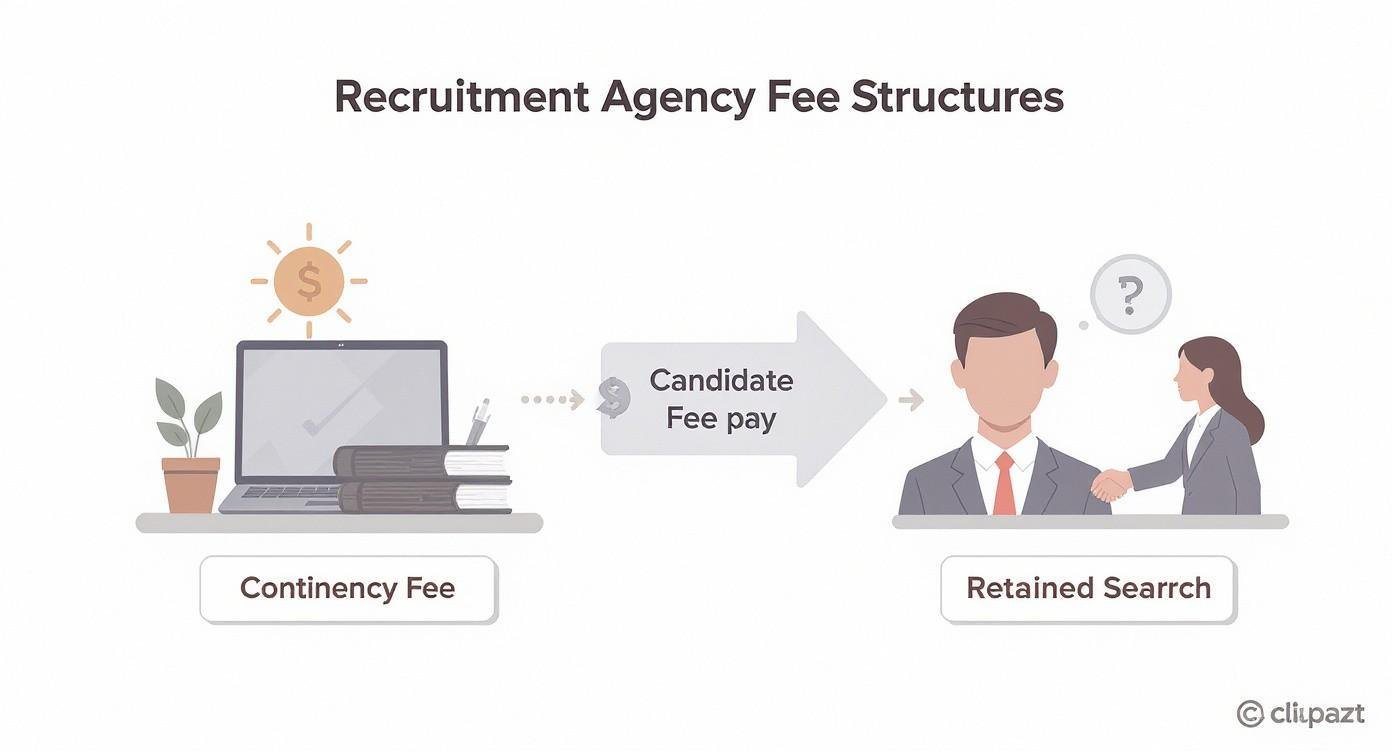
Standard recruitment agency fees generally follow two paths:
Contingency Fees
This is the most common setup. The agency only gets paid if the employer hires their candidate. If the employer finds someone else, the agency gets nothing. We typically see fees ranging from 15% to 25% of the candidate’s first-year salary. This model is high-risk and high-reward for the agency.
Retained Search
In this model, the employer pays a portion of the fee upfront. This is common for high-level roles. The agency acts as a dedicated partner. They provide a deeper level of vetting. They don’t just send resumes. They provide market data and cultural assessments.
Staffing Agency vs Recruitment Agency
We often hear these terms used interchangeably. They are different tools for different jobs. A staffing agency vs recruitment agency comparison comes down to the length of the job and the skill level.
Staffing agencies usually handle temporary or high-volume roles. Think of warehouse workers, office temps, or seasonal staff. They often employ the workers themselves and lease them to the client.
A recruitment agency focuses on permanent placements. They find full-time employees for specialised roles. We use recruitment agencies when we need a specific set of skills that are hard to find on a standard job board.
Executive Search vs Recruitment Agency
When you get into the C-suite, the game changes. The executive search vs recruitment agency debate is about depth. Executive search firms, often called “headhunters,” target people who are not looking for work.
These firms do not wait for applications. They map out entire industries. They reach out to happy, successful executives and convince them to move. It is a proactive and highly confidential process. Regular recruitment agencies often rely more on active candidates who are already searching for a new role.
The Step-by-Step Recruitment Process
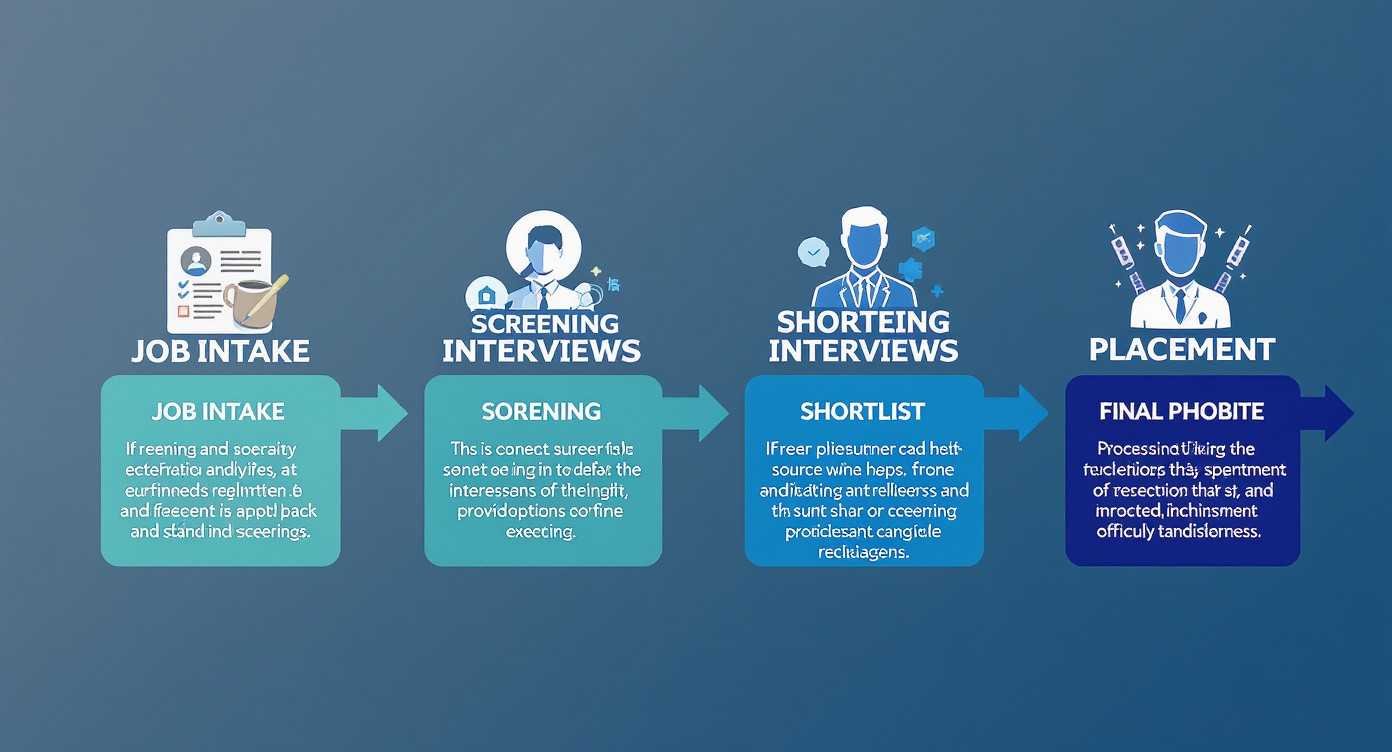
To understand how recruitment agencies work, you must see the workflow. We break it down into five clear stages.
- The Intake: The employer defines the role and the “must-have” skills.
- Sourcing: The agency uses AI tools, LinkedIn, and their private database to find leads.
- Screening: Recruiters conduct initial interviews to filter out the fluff.
- Submission: The agency sends a “shortlist” of the best three to five people to the employer.
- Placement: The agency manages the interview schedule and handles the final salary negotiation.
Why Employers Use Agencies in 2026?
Companies do not pay five-figure fees for fun. They do it because hiring is expensive. A bad hire can cost a company triple the annual salary of that role. We see companies using agencies to save time.
Agencies also provide “passive” candidates. These are people who are good at their jobs and are not looking at job boards. Access to this “hidden” talent pool is the primary reason why the recruitment industry continues to grow despite the rise of automated job sites.
Advice for Job Seekers Using Agencies
If you are a candidate, the recruiter is your agent. You want them to like you. We suggest being honest about your salary expectations from day one. Do not lie about your experience. The recruiter will find out during the reference check, and it will kill your reputation.
Remember that the recruiter wants you to get the job. They get paid when you sign the offer. Use them for insider information about the company culture and the hiring manager’s personality. They can give you the “cheat sheet” you need to ace the interview.
The Future of Recruitment Agencies
By 2026, the industry will have fully integrated AI. Agencies that only “find” people are going out of business. Tools can find people for free. The agencies that remain are the ones that can “evaluate” people.
We look for agencies that understand human behaviour. They use data to predict if a candidate will fit a team. They provide value by being consultants, not just resume flippers. The human element is now the most valuable part of the equation.
Conclusion
We have covered the mechanics of the industry. Now you know how recruitment agencies work and how they generate revenue. Whether you are an employer looking for a star player or a seeker looking for a career jump, these agencies are powerful allies.
Do not settle for a mediocre firm. Look for specialists who understand your niche. Ask about their fee structure and their vetting process. When you find a good partner, stick with them. A great recruiter is worth their weight in gold. They can change the trajectory of your business or your career.
FAQs
Do recruitment agencies charge candidates?
No. Legitimate agencies charge the employer. If anyone asks you for money to find you work, hang up.
What are standard recruitment agency fees?
Most agencies charge between 15% and 25% of the new hire’s starting salary. For very specialised or executive roles, this can go up to 30%.
Is a headhunter the same as a recruiter?
Essentially, yes. However, “headhunter” usually refers to a recruiter who proactively reaches out to people who are not actively looking for a job.
Can an agency help me get a higher salary?
Yes. Because their fee is often a percentage of your salary, it is in the recruiter’s interest to get you the best possible offer. They are professional negotiators.
How do I find a reputable agency?
Look for agencies that specialise in your specific industry. Check their LinkedIn presence and read reviews from both clients and candidates. A good agency will have a clear track record in your field.
